
Hinds County Court Record Requests
Every Hinds County court record request works better with specifics. Name the court and judicial district. Give the case number or caption. State the document title, and say whether a plain copy, certified copy, or docket copy is wanted. The clerk you contact depends on the court. Circuit and County Court files sit with the Circuit Clerk. Chancery, probate, family, land, and equity files belong to the Chancery Clerk. Justice Court and municipal records stay with their own clerk or court-services office. A remote docket search can find the entry. Only the office that holds the file issues a certified copy.
- Match the record to Circuit, County, Chancery, Justice, or the issuing municipal court.
- Use MEC/PAMEC or the local channel to capture the court, district, case number, entry date, and document title.
- Call, visit, or mail the custodian with the exact record request and preferred delivery method.
- Ask for the current total before payment because search, mailing, scanning, and transcript fees are not all published.
- Keep the court-issued certification with the document when a certified copy was requested.
No office here publishes one universal turnaround time or a single generic certified-copy form. The more precise the request, the better the clerk's odds of pulling the right file quickly.
Hinds County Court Record Custodians
Hinds County has no single records desk for every court file. Zack Wallace, the Circuit Clerk, keeps Circuit and County Court records. Chancery Clerk Eddie Jean Carr holds the Chancery Court files. Justice Court Clerk Patricia Woods keeps that court's files. Municipal records go through a city clerk or court-services office. Transcripts are a separate matter. For the official record of a proceeding, ask the court reporter or court administrator.
The Circuit Clerk also runs a second-district office in Raymond at 127 West Main Street, P.O. Box 999, Raymond, MS 39154, phone 601-857-8038. Check the court or district on the docket first. That tells you which Hinds County office to call.
Kinds of Court Records
Not every Hinds County court record is the same item. The docket sheet is the running index of a case. Filed papers are the real documents behind each entry. These are the complaint, indictment, motion, response, order, judgment, exhibit, or plea paper the index names. A certified copy is different from both. The clerk issues it with the required certification attached. That distinction matters most for proof of a signed ruling. A plain list of docket events is not the same thing.
- Docket sheets that list filings, settings, orders, and case outcomes.
- Filed pleadings, motions, notices, and responses where public access permits.
- Signed orders, judgments, executions, and abstracts held by the proper clerk.
- Probate, land, custody, divorce, and equity papers in the Chancery file.
- Justice and municipal case papers, citations, dispositions, and payment events.
A docket screen or downloaded image from a Hinds County case is not automatically a certified judgment. When that difference matters, ask for the exact document by title and date.
Hinds County Docket, Paper, Certification
Three Hinds County items get confused all the time. A docket sheet tells you what happened and when. A filed paper is the actual pleading or order tied to that event. A certified copy is the clerk-issued version you would use for a formal purpose. One catch: a document can be visible in MEC. It may still need a separate certified-copy request. Older Hinds County files may exist only on paper. The docket entry itself can still appear online.
- Docket sheet
- The chronological record of filings, settings, and outcomes.
- Filed document
- The actual paper associated with a docket entry.
- Certified copy
- A copy issued and certified by the clerk that maintains the case.
Save the docket entry date and document title before you contact the clerk. That keeps the request from being open-ended. It also helps separate a court file from an administrative record a county department holds.
Court Records: What They Contain
A Hinds County case file can hold far more than its caption. The docket lists the court, case number, style, filing date, judge or division, case type, and date-ordered events. Attached papers are another story. Pleadings, exhibits, and personal information can be restricted or redacted even when the docket entry itself stays visible to the public.
| Case header | Hinds County court, district, case number, style, filed date, case type, judge, and status. |
|---|---|
| Register | Chronological motions, notices, hearings, orders, judgments, and related events. |
| Filed papers | Public pleadings, responses, exhibits, plea papers, and signed orders when access is allowed. |
| Settings | Scheduled date, time, court or judge, and the event type when the local docket shows it. |
| Disposition | Judgment, dismissal, plea, conviction, appeal, or another recorded closing outcome. |
Treat the docket as an index. When you need the exact terms of a ruling, read it alongside the underlying order or judgment.
Hinds County Administrative Record Requests
Hinds County's public-record request form exists for county administrative records, not court files. It covers an identifiable record or class of records. Research and copy charges can apply. For an actual Hinds County court case record, go to the office holding the file. That means Circuit, Chancery, Justice, or municipal. Getting this distinction right saves time. It keeps a request from landing at the wrong desk. An administrative request should describe the record sought. It should not ask an office to create new information. A court-file request should identify the court, case, document, and format. City of Jackson administrative items follow a separate channel through its Open Records Department. Hinds County's official request form lays out the county's administrative-record process.
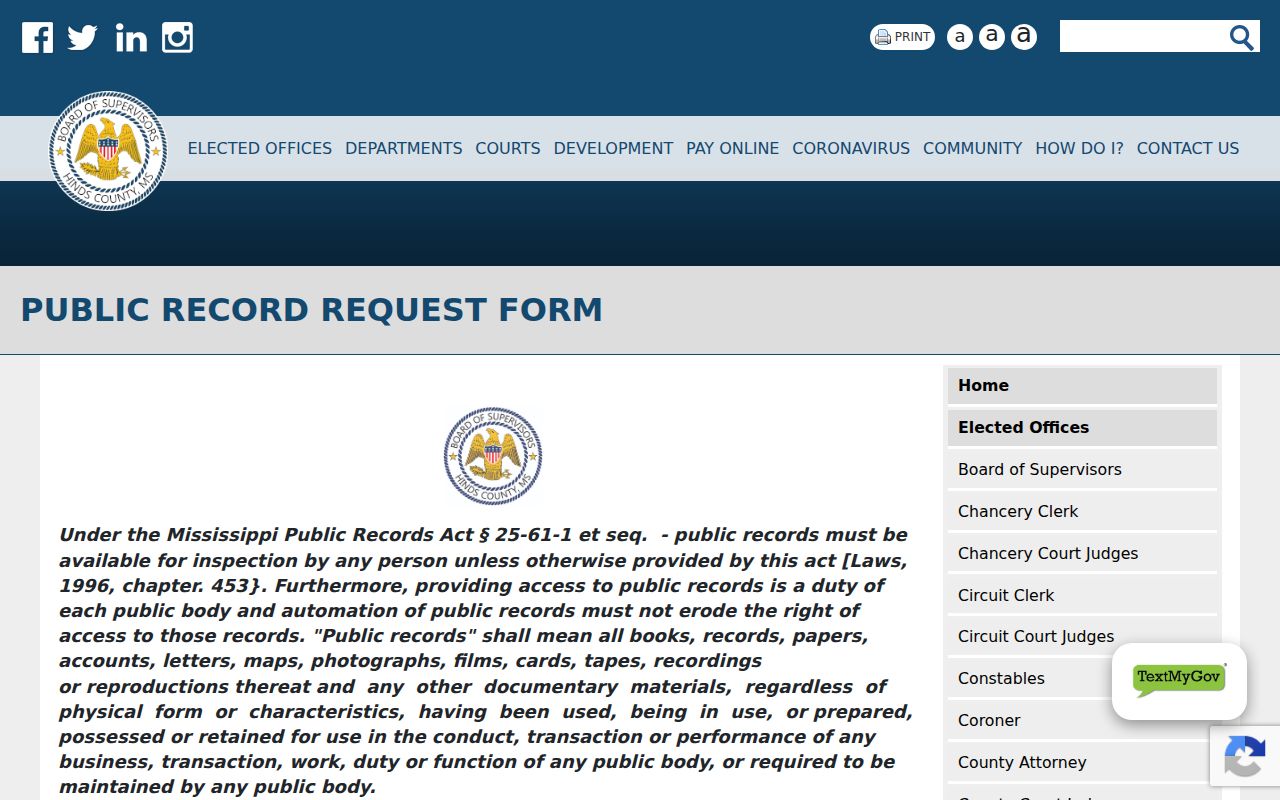
Use that form for the nonjudicial record it was built to reach. It is not a substitute for a clerk-held case-file request.
Copy Fees and Certification
Published Hinds County and Mississippi baseline fees draw a few lines. A copy made by the clerk costs differently than a self-copy. A certified complete document carries its own charge. Say which version you want when requesting. The table sets no universal search, mailing, scanning, or transcript fee. Those amounts are not all published. Confirm the total with the office holding the record before sending payment.
| Hinds County custodian or service | Published fee |
|---|---|
| Circuit Clerk certification of complete filed document | $1.00 per document |
| Circuit Clerk copy made by clerk | $1.00 per page |
| Circuit copy by another person | $0.25 per page |
| Circuit final record or transcript | $2.00 per page |
| Chancery certification of complete filed document | $1.00 per document |
| Chancery copy made by clerk | $0.50 per page |
| Chancery copy by another person | $0.25 per page |
The Hinds Circuit Clerk fee page shows current local billing.
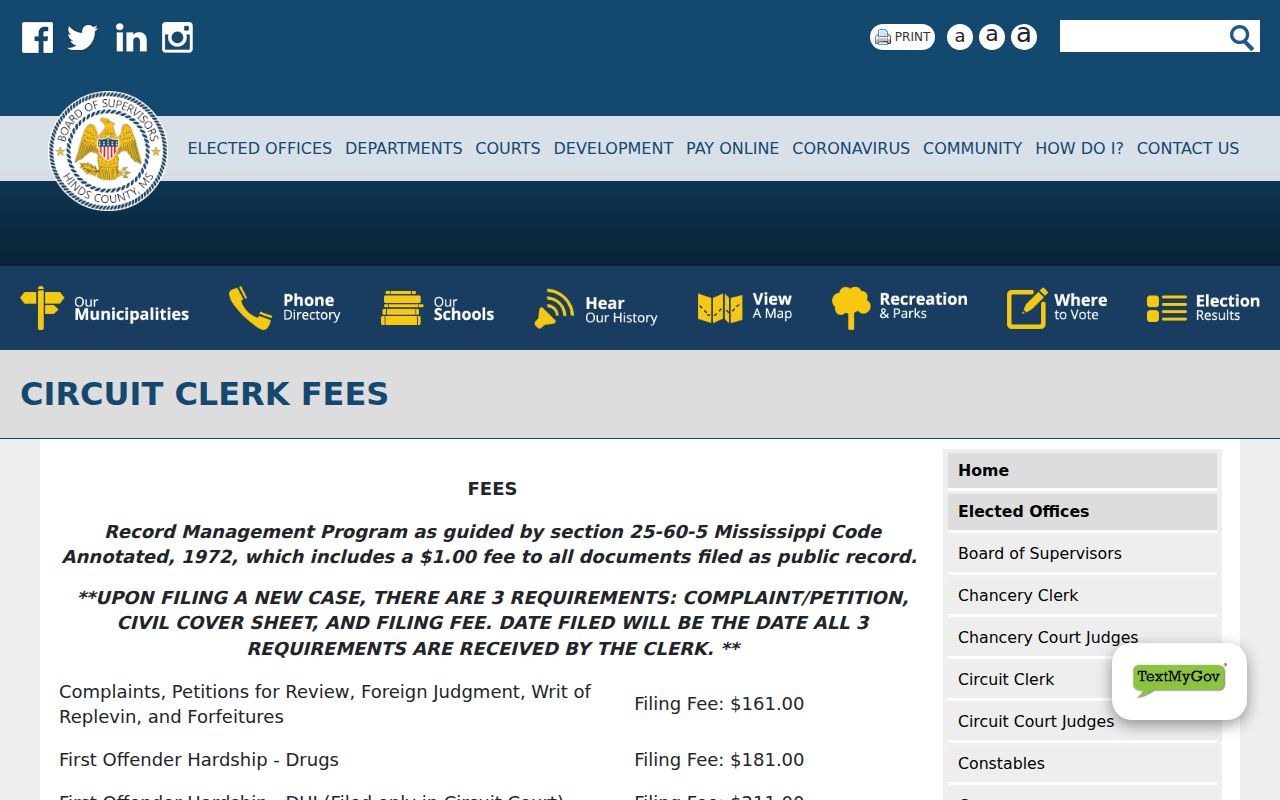
A $1 Hinds record-management fee applies to filed documents, not to a requester's copy.
Hinds County PAMEC and Clerk Costs
PAMEC lets you search a Hinds County electronic docket sheet from home. It is not, though, a way to get an official copy. Remote public access costs $10 for a yearly registration or renewal. Add $0.20 per page of search results. A search that turns up no match still counts as one page. Walk into the office and viewing is free under MEC procedures. Court rules and the clerk's copy fees still apply, though.
| Need | PAMEC remote access | Originating clerk |
|---|---|---|
| Find a non-restricted MEC docket | Registered access with data-page charges | In-office viewing path where available |
| Read a public electronic document | May be available with a page charge | Can provide the copy route or confirm legacy status |
| Get a certified copy | Not a clerk certification | Custodian issues the certified document |
Treat remote results as a locator, nothing more. For a certified record, a paper file, or any access question, the Hinds County clerk is still the authority.
Access Rules for Court Records
Mississippi public-record law backs your access to public records. Hinds County judicial files also answer to court rules and orders, though. Some matters stay off the remote system. Youth records, protected family papers, sealed orders, and expunged matters are examples. Protected identifiers and anything a judge or MEC rule restricts may stay off too. Where the law allows, a clerk can release a public portion with redactions. Filing a public-record request will not crack a seal.
Mississippi access rules: Miss. Code §§25-61-1, 25-61-5, 25-61-7, and 25-61-13 establish the state public-record policy, reasonable inspection and copy procedures, permissible cost-based charges, and a complaint or chancery review path for a denial. MEC procedures and court rules govern electronic court access and do not erase a court-specific restriction.
The Mississippi Ethics Commission's official Public Records Act text holds the statutory language itself.
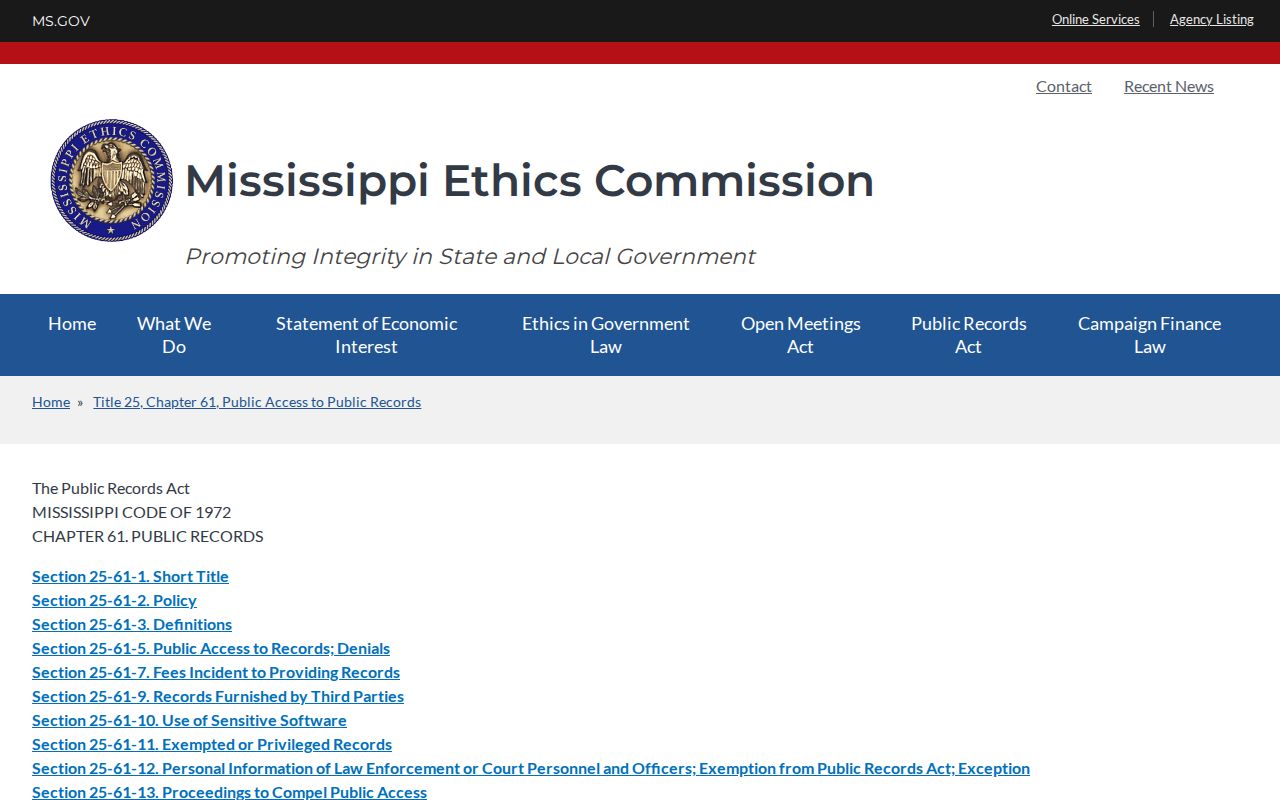
That statutory route covers public records generally. A restriction on a Hinds County court file runs through the court and clerk instead. If an access dispute arises, the Ethics Commission public-records page explains the complaint process and its model-rule resources.
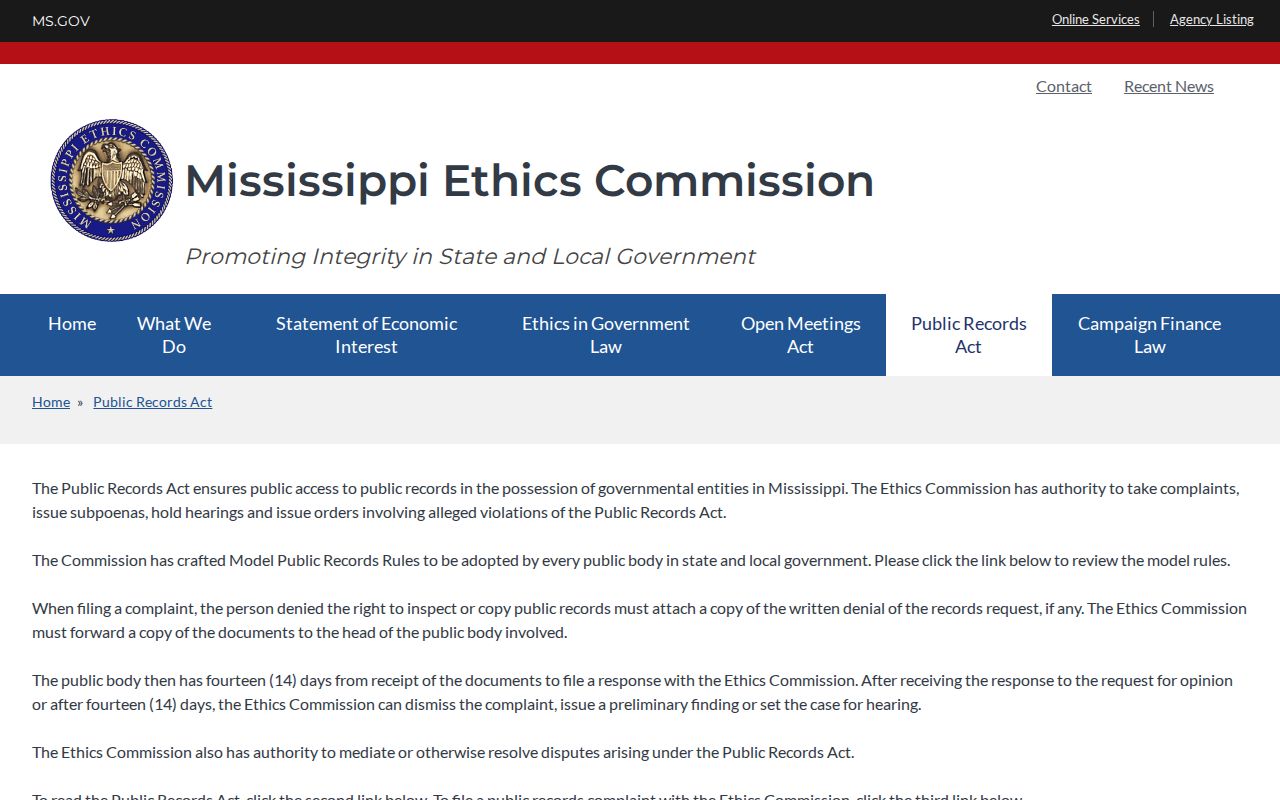
Facing a court-file problem? Ask the Hinds County clerk or the court first about the controlling rule or order. Only then consider any administrative denial route.
Hinds County Transcript Custody
A court reporter transcript is not simply another clerk copy. Hinds remote-hearing guidance identifies the court reporter transcript as the official proceeding record for appeal or official purposes. Contact the court reporter or court administrator for a transcript and ask the clerk for the filed docket, order, or judgment. Transcript-specific charges were not located in the official Hinds County sources and should be confirmed with that custodian.
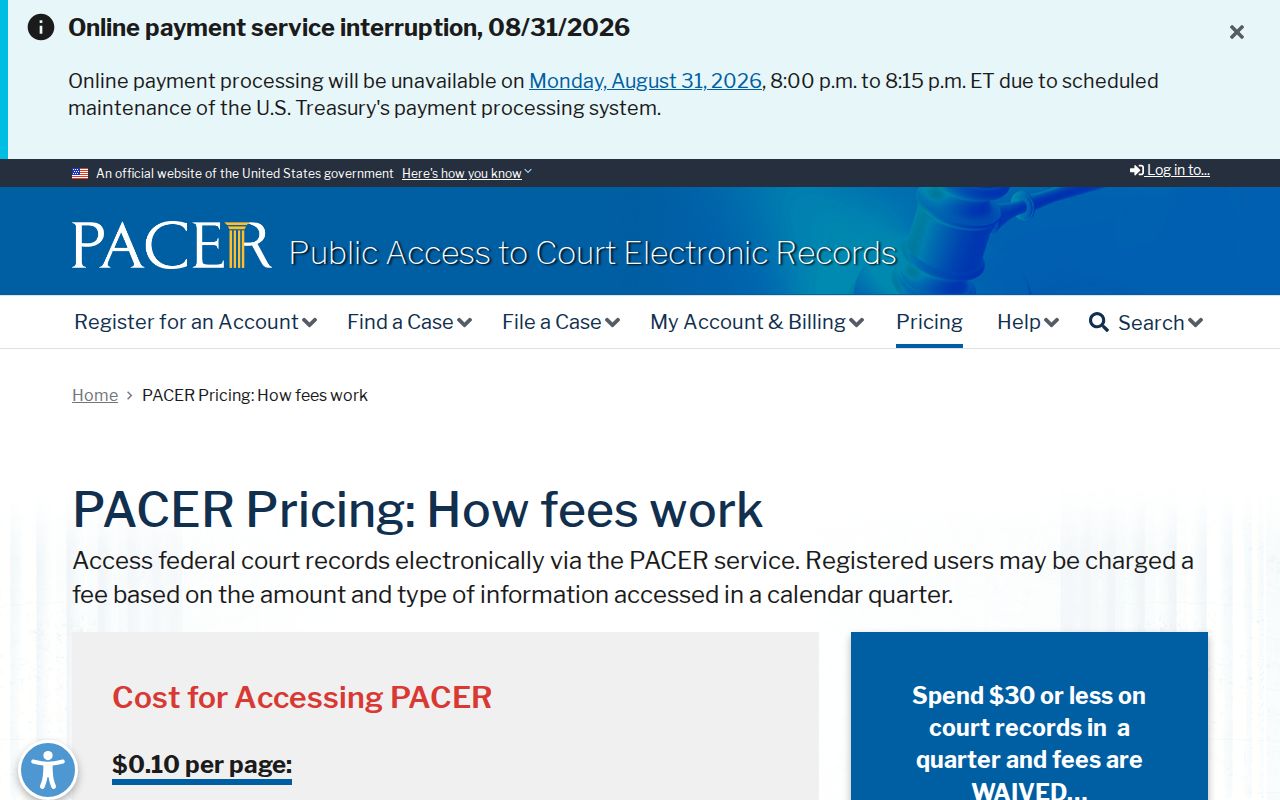
Federal records follow a separate system. PACER's official pricing information concerns federal court access, not Hinds County state court copies. The separate fee structures reinforce the core rule: request the record from the office that keeps it.
PACER pricing illustrates the separate federal docket-access system.
In a Hinds County case, the court reporter and the local clerk hold distinct records as separate custodians.